
 EN
 TR
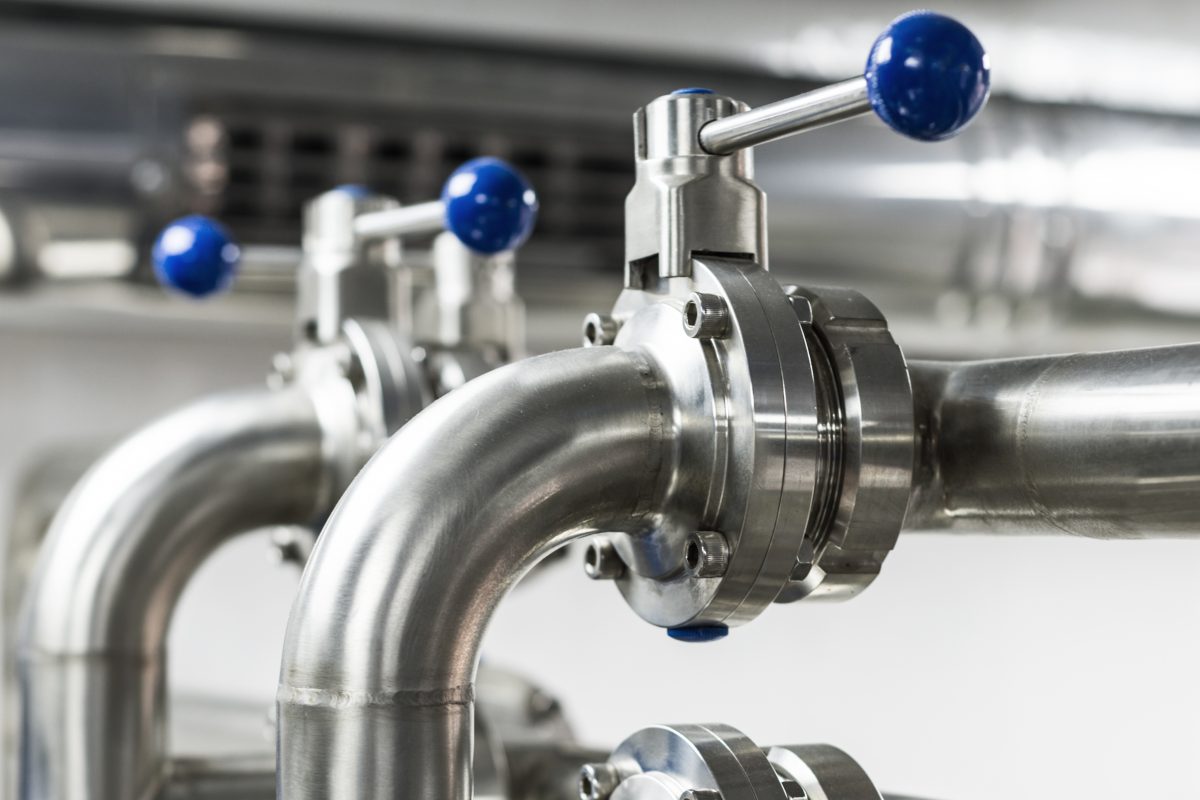
Yüksek Saflıkta Gaz Hattı Tesisatı
Industries whose core processes rely on cleaning need effective solutions for the supply of liquids and gases. Analysis After procuring the necessary parts, modules and skids for the installation of high purity lines, the clean room creates the necessary project for distribution and performs the assembly. By making use of the experience of different processes, chemicals and their application, the installation is created by preventing organic and inorganic contamination under clean room conditions.
Although there is no clear recipe for high purity piping, these pipes are used to establish a certain level of cleanliness. This can be accomplished with different production, inspection, inspection and testing methods defined in the ASME B31.3 process piping standard. The nickel and chromium ratios in some of the stainless steels on the market may be kept low because these elements are expensive. Analysis uses high quality materials defined by ASTM standards to provide high corrosion resistance in Clean Room assemblies. The elements, fixtures and special parts used are subjected to electropolishing and passivation processes.
Electropolishing is a superior process compared to mechanical polishing and it is especially preferred for semiconductor applications as it does not remain abrasive after the process as in mechanical polishing. Corrosion resistance is in better proportions due to the increased chromium-iron ratio. In addition, a smoother surface is obtained at the end of the process and drying and system purge times are reduced thanks to the reduced wet surface area caused by the reduction of the particles being retained in microscopic cracks.
In the passivation process, an acid bath is used to increase the corrosion resistance of the material by creating a non-reacting passive layer that provides protection against external elements.
Elements used in high pure gas installations are as follows:
stainless steel pipes
connecting brackets
VCR (vacuum coupling radiation) connectors
Distribution elements (manometer, valve, etc.)
gas panels
Gas modules (gas stick)
Assembly
No matter how complex the required process piping system, straight lines provide ease of installation and maintenance. In addition, keeping the road simpler will reduce costs. Similarly, the restrictions imposed by the facility should also be taken into account. Designs that make sense on paper can be difficult to implement in practice due to existing equipment, pipelines and walls. Therefore, it is necessary to be prepared for the difficulties that may be encountered during installation by designing the planned pipeline flexibly.
Care
In a good design, besides the ease of assembly, maintenance, repair and cleaning issues should also be considered in advance. To ensure proper maintenance, longer sections must be divided into shorter sections and more controllable pipe sections created. In this way, the piping is divided into partial sections, making it easier to disassemble for repair and improvement. Likewise, how the gas in the pipe will be evacuated before maintenance and line elements such as valves should be easily accessible. It should be noted that if this is not done, it may cause unnecessary prolongation of the maintenance process and in some cases harm to the maintenance personnel.
Functionality
Functionality is paramount in any piping system. While determining the length, pressure, safety, insulation requirements and line elements of the line to be used during specific applications, attention should be paid to how they will work as a whole rather than evaluating all these items individually. What to do in case of failure of any component on a line should be planned. Finally, the possibility of expanding the system in the future should be reviewed and necessary preliminary studies should be done.