
 EN
 TR
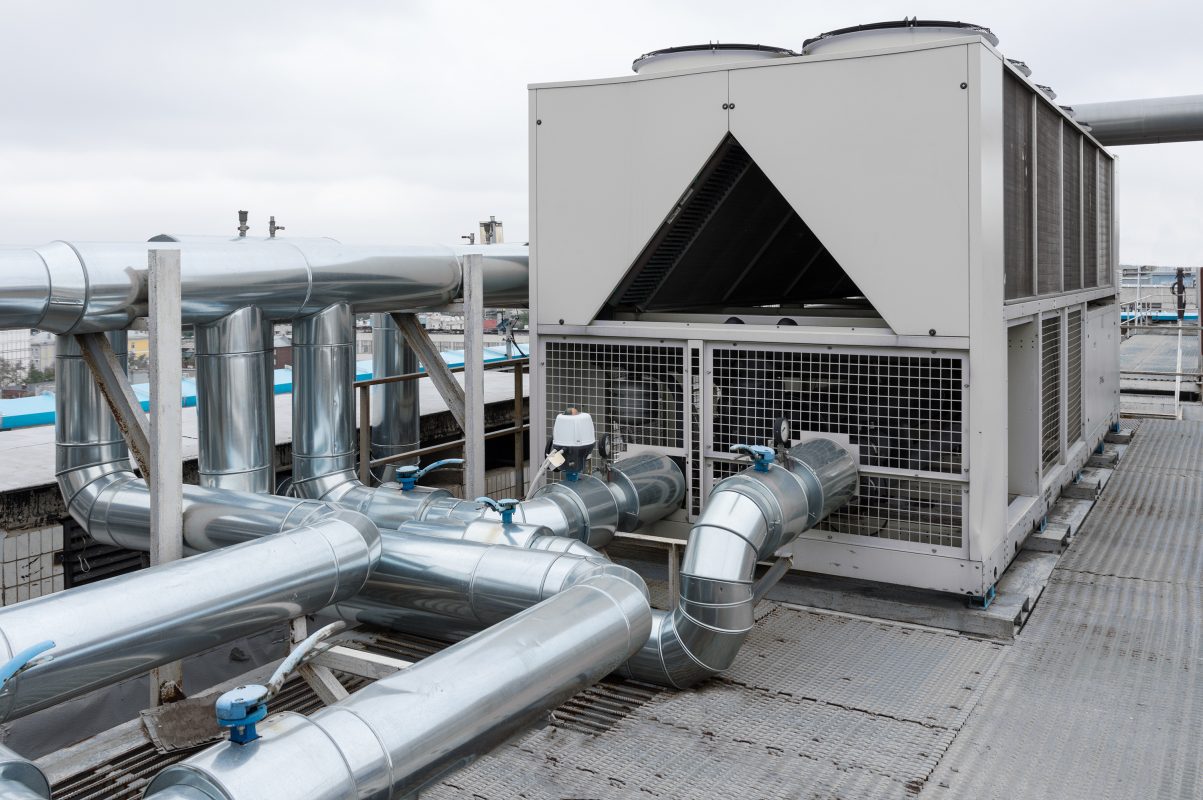
HVAC Uygulamaları
HVAC (heating, cooling, ventilation) systems for clean rooms require knowledge on many subjects such as clean room standards, air flow patterns, room pressurization, temperature and humidity requirements, special equipment to be used in the room, measuring devices and control.
What distinguishes clean room HVAC systems from conventional systems?
- high air flow
- air flow model
- High efficiency filtration
- Chamber pressurization
high air flow
Conventional air conditioning systems usually have 2-8 air changes per hour, while in clean rooms this number can be much higher than the cleanliness class of the room. In lower cleanroom classes (ISO 9 – ISO 6) the number of air changes is controlled. In more sensitive clean rooms, the surface velocity is kept within certain limits instead of the number of air changes. The people in the room and the amount of particles originating from the process should be considered when making all calculations.
air flow model
Three different air flow models can be mentioned when designing a clean room:
Unidirectional (laminar): Air moves straight, vertically or horizontally in an unobstructed path.
Non-unidirectional (turbulent): Air flow creates an irregular, non-parallel flow.
Mixed (karışık): Hava akımı odanın farklı bölgelerinde laminer, farklı bölgelerinde türbülanslı şekildedir.
High efficiency filtration
Generally, HEPA filters are used in clean rooms, which can capture 0.3 micron particles with 99.97% efficiency. HEPA stands for high efficiency particulate air. In addition to the diffusion filtration mechanism, different mechanisms are also used in HEPA filters. Although the filters can be located on the air handling unit, they are mostly installed in the HEPA filter boxes above the clean room to ensure the cleanliness inside the room.
Chamber pressurization
Clean rooms are generally min. It is designed to have a positive pressure of 5 Pa. This is achieved by sending more air flow into the room than the amount that is exhausted.
In clean room systems with many rooms, the most sensitive room is held at the highest pressure relative to the other rooms. min. By creating a differential pressure of 5 Pascal, it is aimed to remove the pollutants from the environment by moving the air from the area with the highest pressure to the areas with lower pressure.
If the substance being studied is in the hazardous class, it is desirable to keep the room at negative pressure to prevent the dangerous substance from leaking out. In such cases, it may be necessary to filter the exhausted air from the room and throw it outside.